Inga Gvasalia, Samegrelo
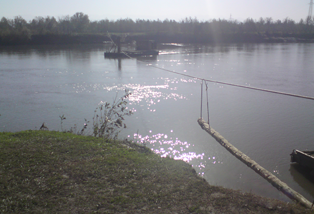
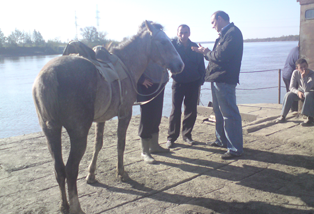
We crossed the Rioni River by ferry. We are sailing to Siriachkoni. This is the village in Senaki district close to Zemo Chaladidi village across the Rioni River. In the1930s, two-hundred families lived in the village. Today the village is completely isolated from its environment. Because of the recent heavy rains, the Rioni River changed its bed and destroyed the dike at the end of the village. One more rainy season and the Rioni River will overflow the villagers too. The locals are afraid. We are traveling to the village by a cart together with the officials of the district administration and representatives of the opposition parties.
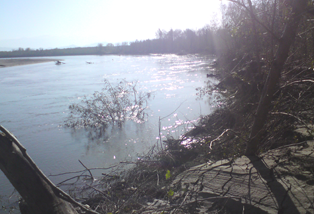
There is 8 kilometers till the end of the village. The Rioni has overflowed the road and soon it will destroy part of the Kolkheti national forest-park too. Everything is flooded around. The uprooted trees are scattered on the dry river-bed. Jackals have always lived in this forest, but now wolves have appeared. They enter the village and kill our domestic animals.
Akaki Topuria- who is a native of Siriachkoni- has written a book about it entitled “There Was a Village”. According to an old story, a ship of Syrians sailed to the village and could not move forward. “Chkoni” means the sandy bank of the Rioni River; the name of the village originated from this topographical reference.
There used to be three farms in the village; there was a school and people worked there. Today, everything has stopped. Those who have remained in the village have to travel 8 kilometers by cart to reach the ferry on the Rioni which will take them to the town. In fact, the “road” is not really a road; it is a flooded path cut between the trees where a cart can hardly move along it.
Finally, we reached the first wooden house at the entrance to the village which has been washed by the Rioni. Everybody has wooden houses in Siriachkoni. The yards are also fenced by wooden poles.
“This first house is mine. I have been living here for 45 years. The water took the dike away in one day. I cannot sleep peacefully at night. I often watch the river. I permanently hear the sound of water. I do not want to leave the area but what shall I do?! Shall I die in the river at my old age?” said Guli Danelia.
“We are Georgian Papuans. You see our living conditions. I have two children. There is no school here. How can I transport children by cart? You also see our situation. When the river floods, we cut the new road and fix the damaged electricity posts. The electricity supply is cut off immediately after the river floods. Who pays attention to us? What did they do after they visited the village? They remember us only before elections. We petitioned to the district governor seven months ago. The commission arrived in the village. They examined everything but nothing has changed. The president states on TV: “electricity in every village,” “gas in every village.” We hardly have electricity and can only dream about gas. Soon, the river will overflow us,” said Lali Pachulia.
“The district governor promises to resolve our problems every day. We have been waiting for 7 months already and nothing has been done yet. We need attention before the river swells. The recent heavy rains destroyed the dike. One more heavy rain and we will be under water. Nobody will find then us in the river,” said Jemal Beraia.
“We slept in turns during heavy rains. It is impossible to live here. How long can we live in such fear? We were born and have grown up here. Nobody wants to leave the village but what shall we do? If they do not build the dike, they should resettle us somewhere in the same community so we continue our lives,” said Valeri Tskhvitaria.
There are 23 residents in Siriachkoni. Nine families live in the Akhalsopeli settlement at the end of the village – the most dangerous place of the village. The dike is destroyed. The Rioni River is low in good weather. During the rainy season its depth reaches 3 meters and there is a threat that it will flow like a tsunami from the cracked dike.
“In fact, the village is being abandoned and its history will disappear. As you know, there is a national forest-park at the beginning of the village. When the park has similar status, the village should also be assisted but everything happened in the opposite way in our case. Nobody pays attention to the forest-park. The only thing they have done is prohibit the cutting down of the trees in the forest. However, the Rioni River is carrying away those trees and even the administration of the forest does not care about it. As a member of the municipal board, I was concerned by the complaints of the local population. I also come from this village, and so I voiced my concern about this problem at a session to the board. I also petitioned to the district administration. We will send a letter to the parliament as well. I hope the central authority will take the necessary measures if the local budget cannot afford to find the resolution to the problem. We can resettle these people to the Chaladidi village where we have empty streets. I am against financial compensation; in this case they will move to the town. We will not be able to keep people in the village and all our efforts will be wasted. I want these people to stay in their community. Unless we take the proper measures before spring, the Rioni River will overflow these people,” said Mamuka Babilua , a member of the Senaki Municipal Board from the village of Zemo Chaladidi.
The representatives of the district municipal board and administration travelled to the village by cart together with us.
“It is very painful topic which requires an urgent solution. Soon, we will reach agreement on how to assist the village,” said the Chairman of the Infrastructure Commission of the Senaki Municipal Board Soso Mikava.
The head of the Senaki district economical development and infrastructure service office Roman Todua confirmed that the population of the village had petitioned to the district administration seven months ago. “The district administration has informed higher levels of government about the problem. Two or three letters were sent to the Ministry of Environment and Natural Resources. The administration does not have the funds to reinforce the dike of the river. They are waiting for the decision and I hope it will be done soon. Serious activities should be carried out and it is beyond our financial abilities.”
We will see what measures will be taken by the central authority. We will follow their activities and if it is necessary, we will again travel 16 kilometers by cart.
News
October 30, 2024
PS Commission Members were hostile towards independent observers
Popular
Articles
November 15, 2024
Successfully Advcated Cases of the Union of Human Rights Defenders – Human Rights Center